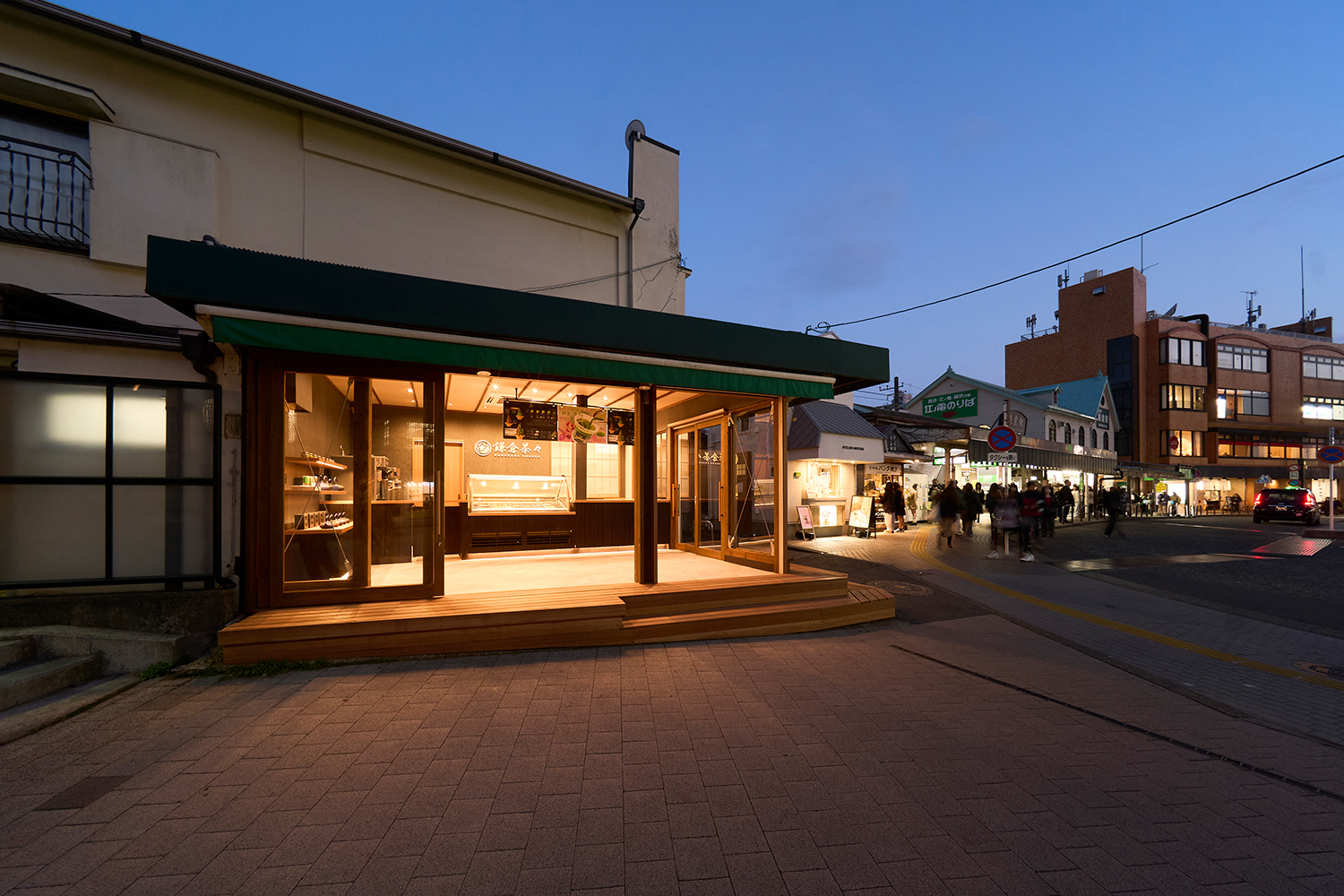
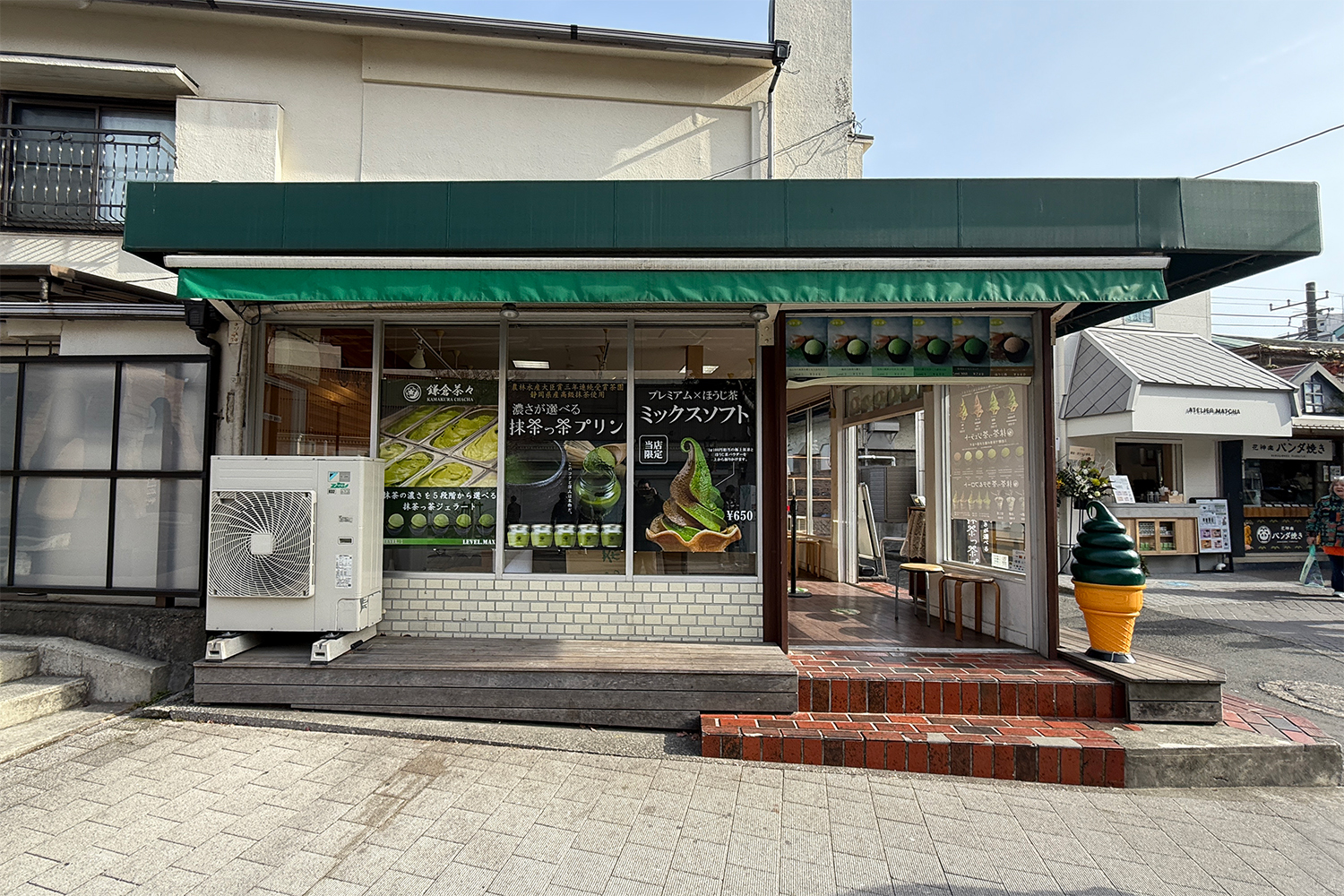
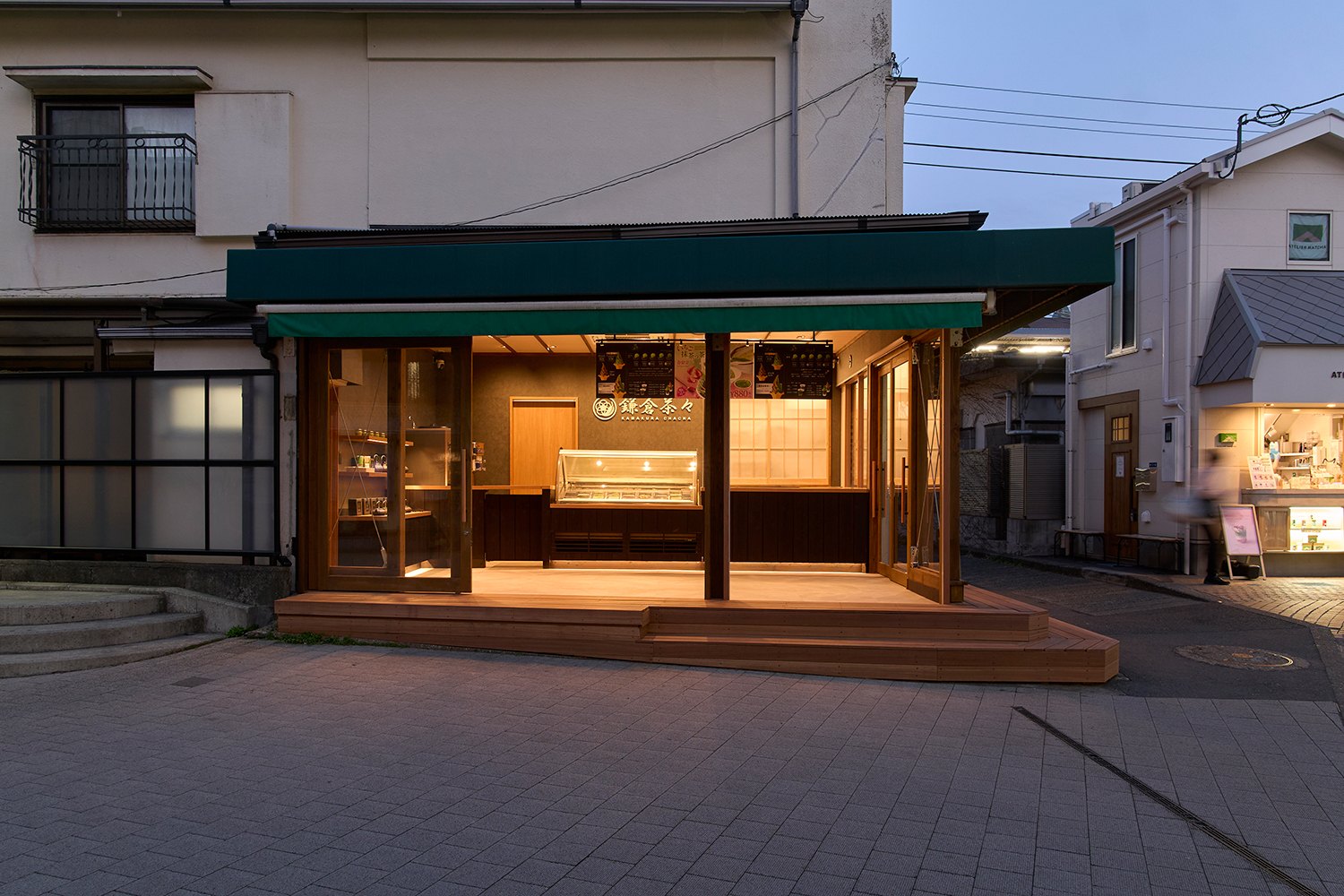
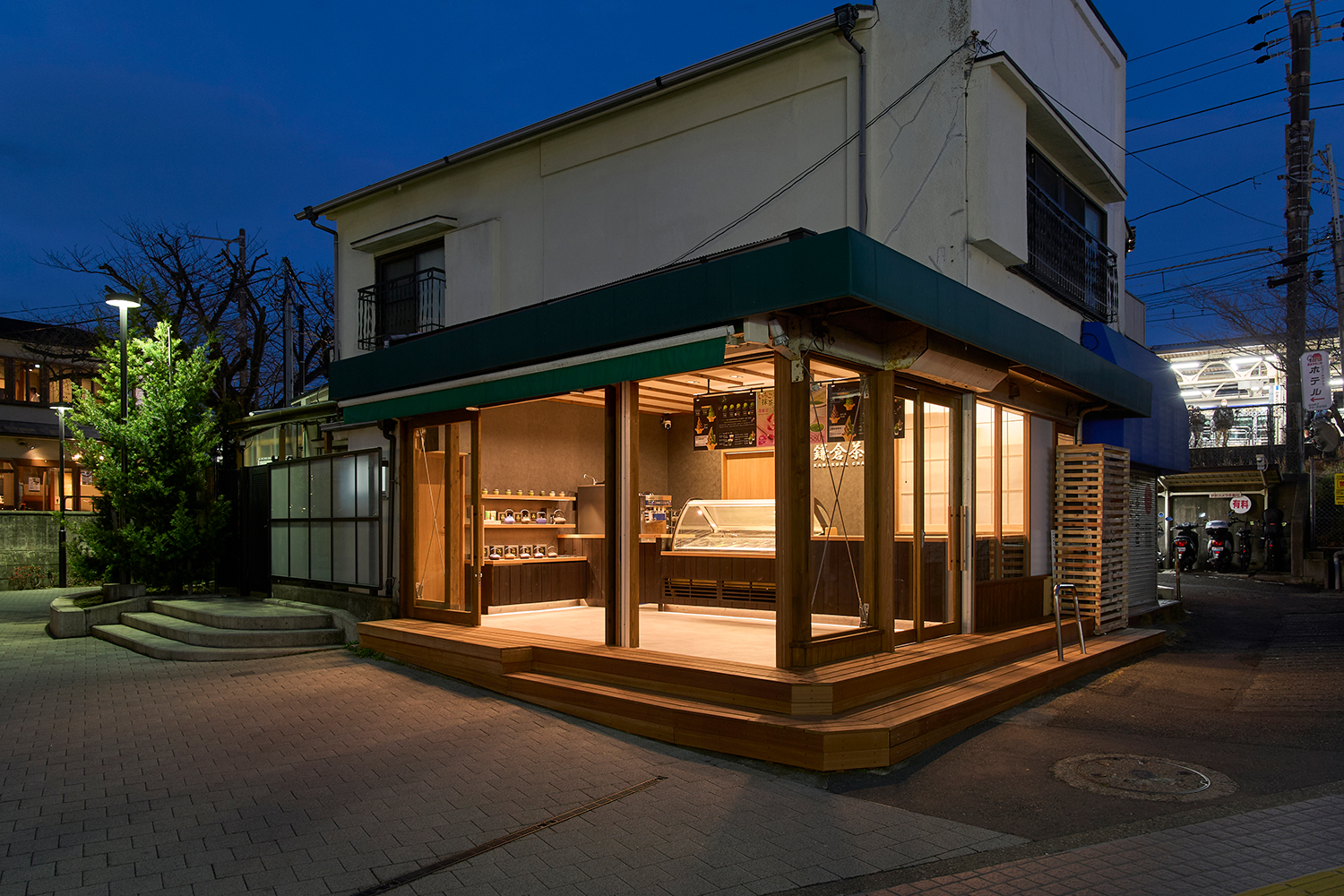
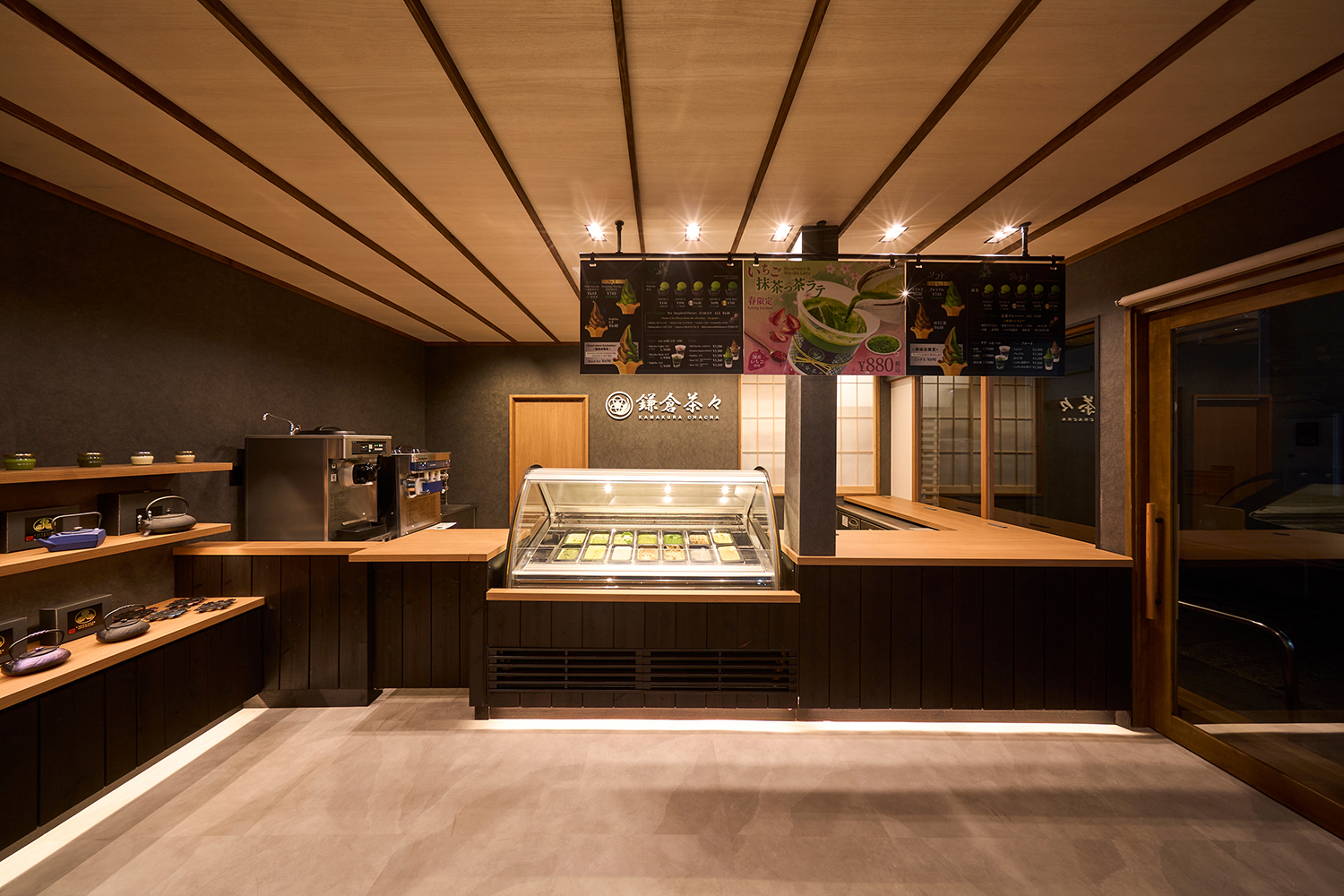
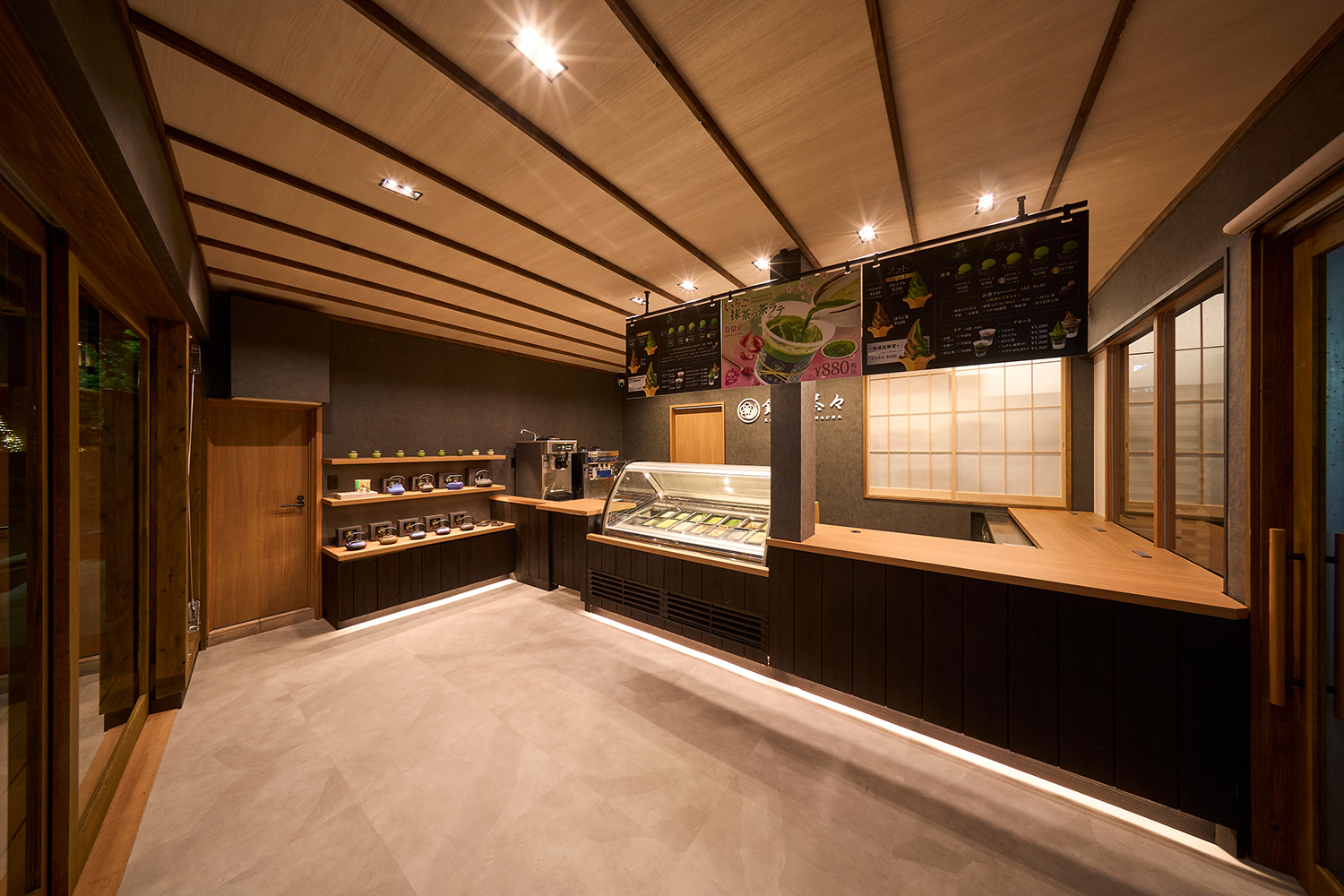
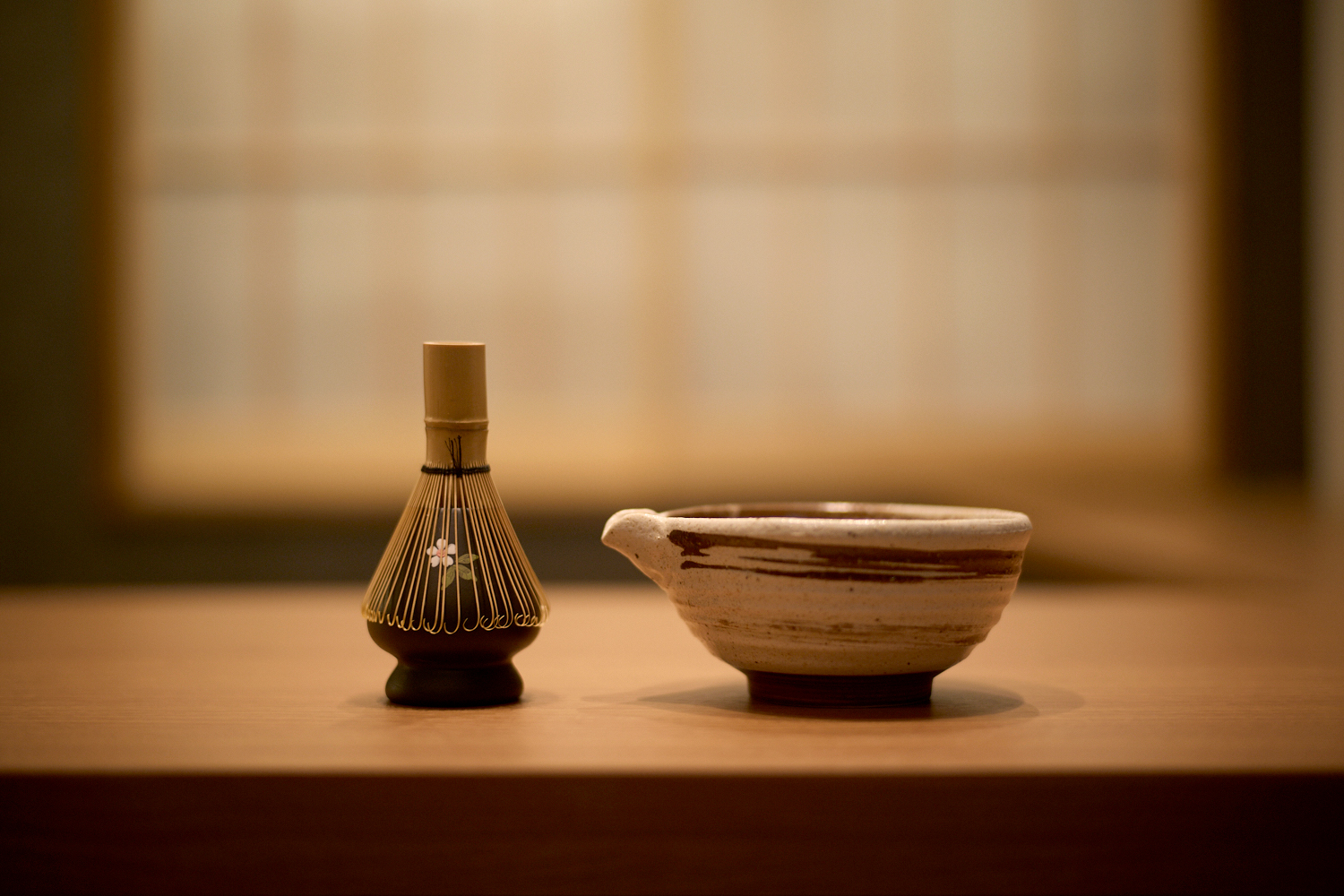
The design of Kamakura Chacha Onari Store was conceived not simply as a retail space for serving matcha, but as a place that rearticulates, in a contemporary context, the spiritual depth inherent in Japanese tea culture. What we focused on was the essential power of the tea room: a space that quietly sharpens the senses and directs awareness toward materials, gestures, and the passage of time itself. In this project, we sought to extract that essence and recompose it into a space appropriate to Kamakura, a place shaped by a rich accumulation of history and culture.
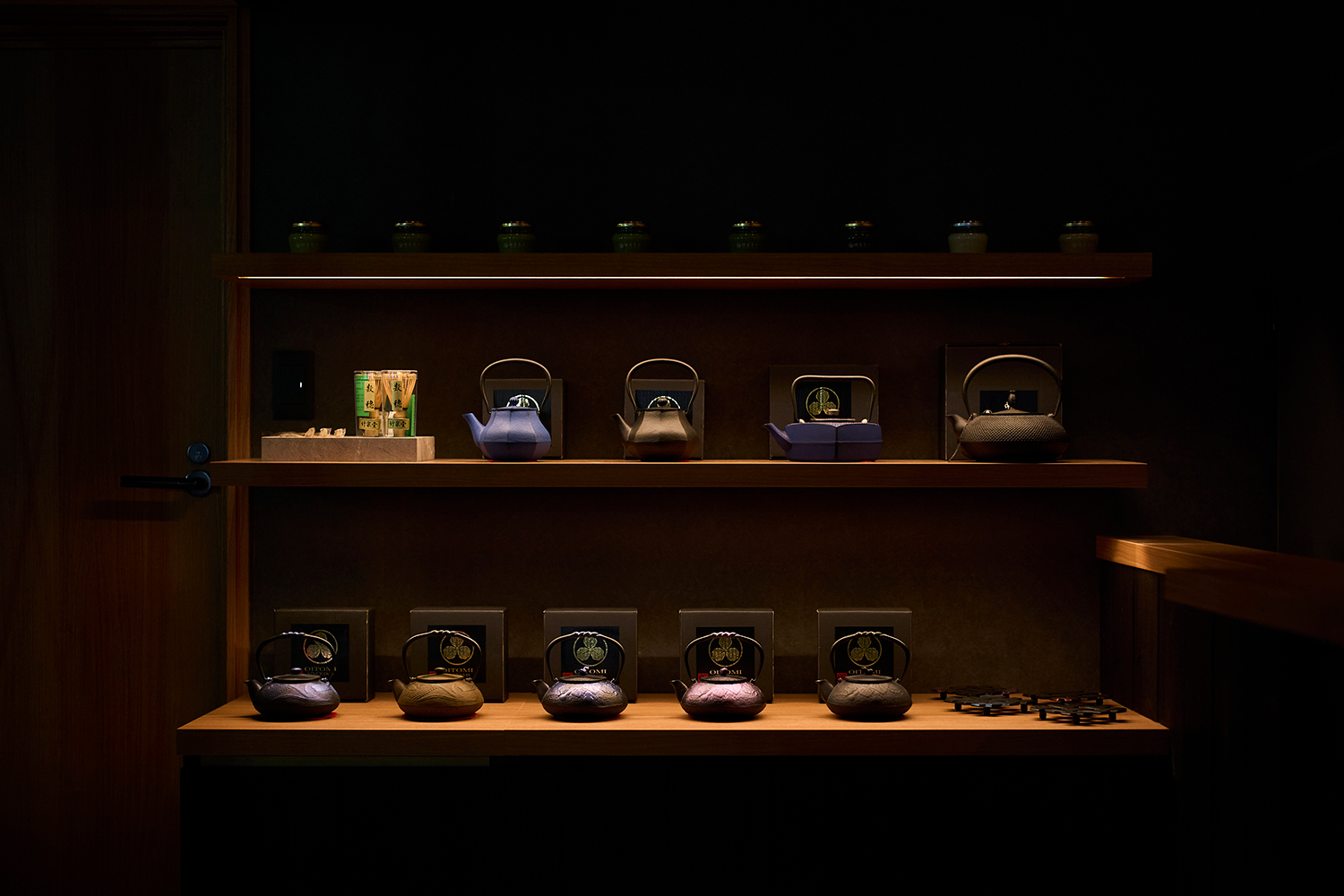
The space is defined not by decorative excess, but by the careful orchestration of color, material, and light. It was designed as a quiet stage upon which the vivid green of matcha and the gesture of presenting each cup can stand out with clarity and dignity. The deep-toned walls and fixtures function as a backdrop that sustains visual stillness, naturally guiding the visitor’s awareness toward both the product and the experience.
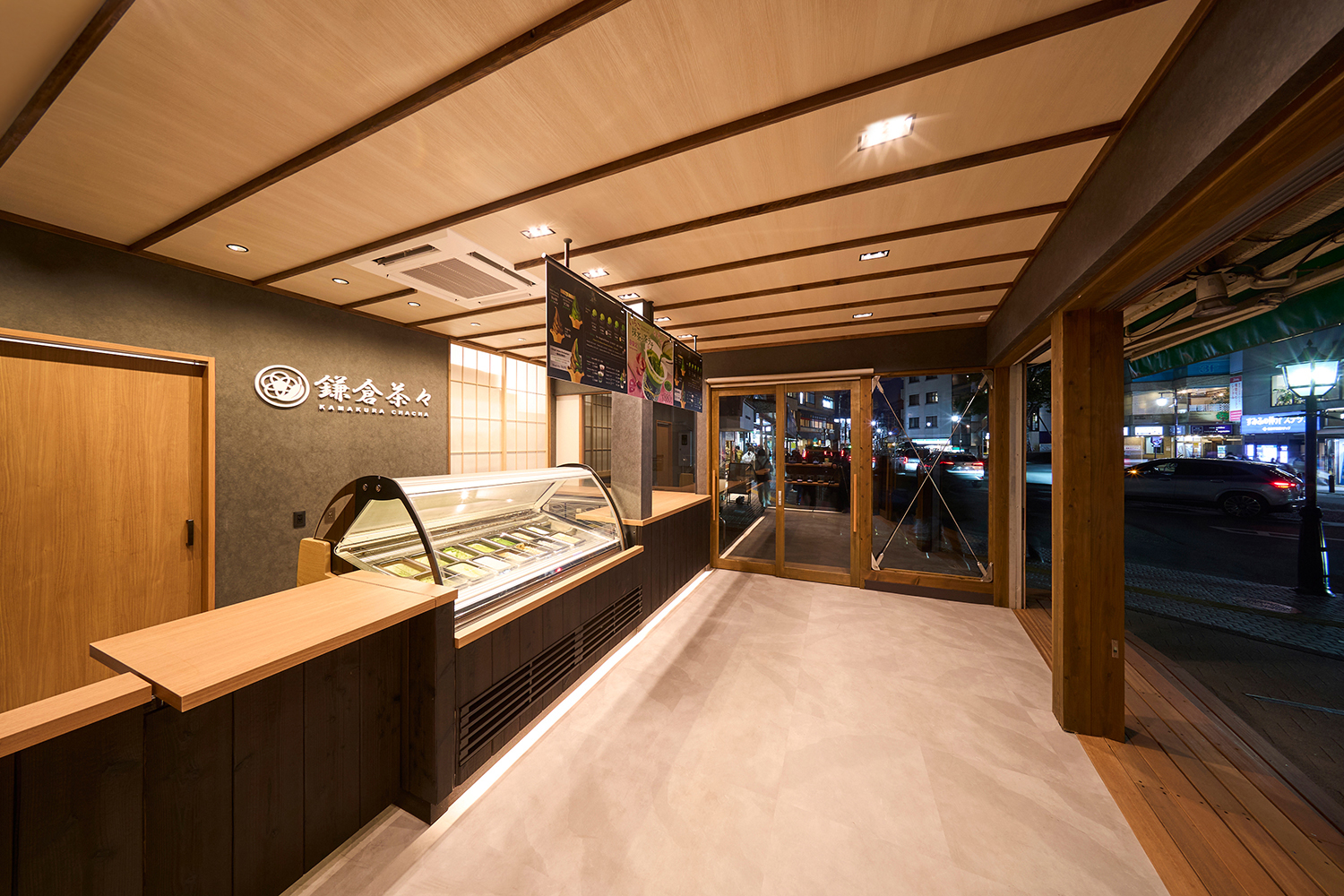
Washi paper was selected for the walls, introducing into the space the delicate texture and soft light-absorbing qualities of a traditional Japanese material. By gently diffusing light and creating subtle fluctuations across its surface, washi brings a refined sense of tension and a calm warmth to the interior. This softness is layered with the clear lines of the wooden elements, achieving an expression that is at once restrained and rich, where gentleness and structure coexist. In particular, the continuous wooden frames across the ceiling are a contemporary translation of the order and rhythm found in traditional tea-room architecture. They provide the space with a distinct architectural framework while quietly guiding the visitor’s gaze and bodily awareness.
At the same time, the identity of Kamakura itself was treated as an essential design element. In a place defined by historic streetscapes and a gentle sense of time, we believed the store should serve not merely as a point of sale, but as an entrance into the aesthetic sensibility of Japanese culture. While the large opening maintains continuity with the surrounding town, the moment one steps inside, the mind naturally shifts, giving rise to a quiet concentration suited to encountering matcha. That transition of awareness is itself one of the essential qualities of the spatial experience.
Rather than superficially replicating the form of a traditional tea room, this project reinterprets its underlying philosophy through the lens of contemporary sensibility and the functional demands of a retail environment. The aroma of matcha, the light softly received by washi, the order of wood, and the serene atmosphere that fills the space come together as one. Through this integration, the act of tasting matcha is elevated into an experience that touches the deeper layers of Japanese culture.