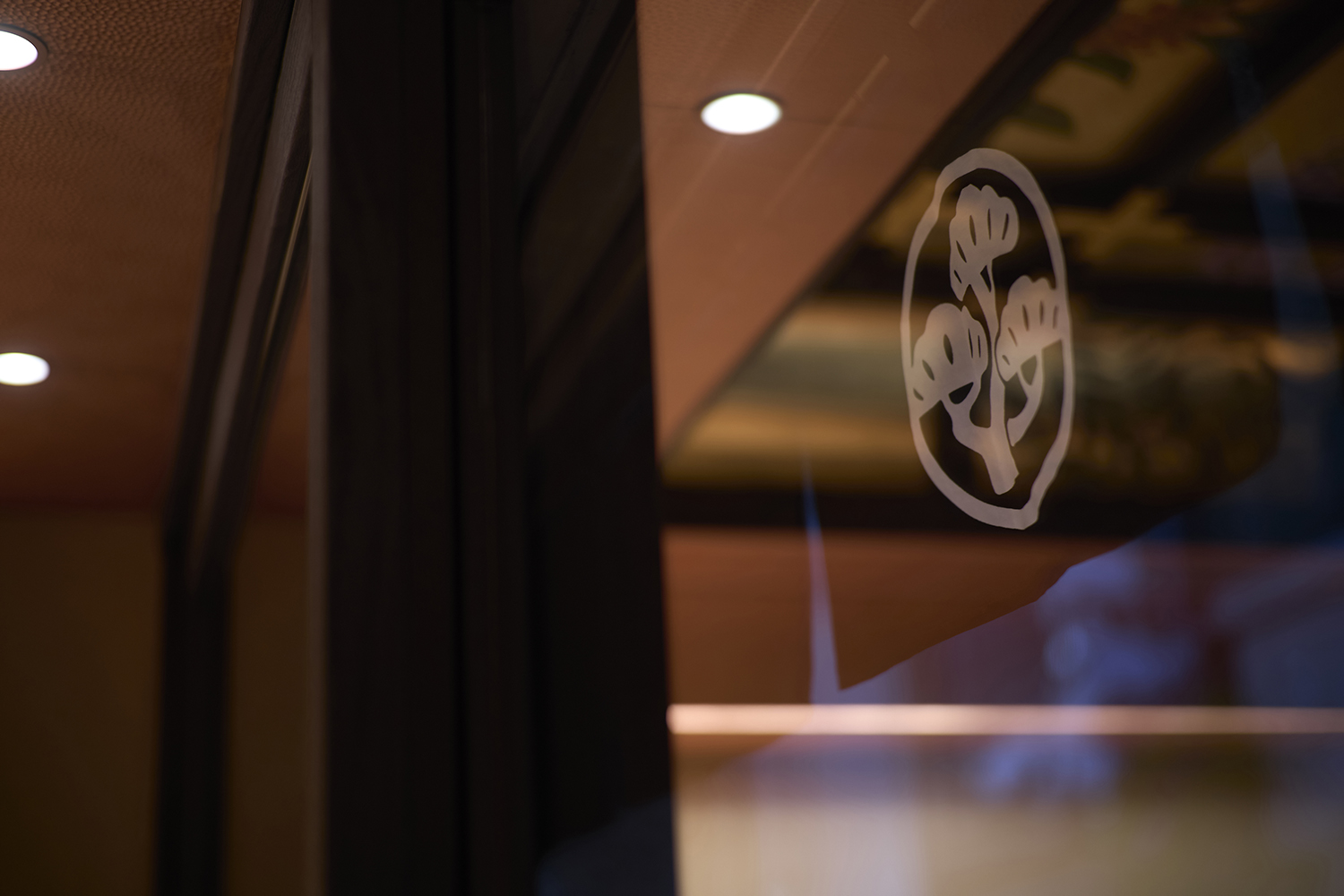
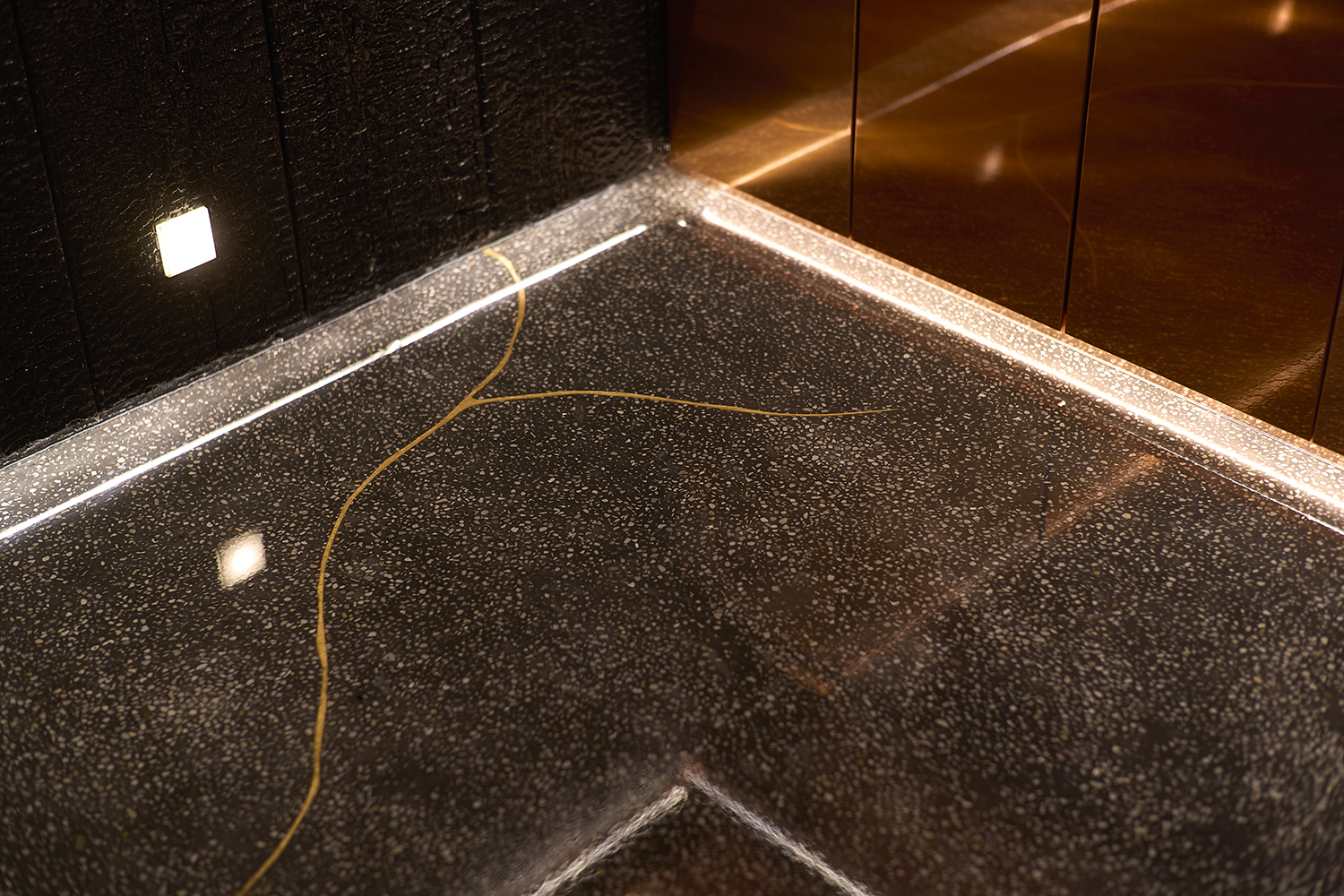
This project envisions a new flagship store for BONGEN COFFEE in Ginza 6-chome, Tokyo, at the heart of a city where tradition and innovation intersect. Its inspiration comes from Edo Castle, one of Japan’s most important historical symbols, and in particular from the Honmaru, its spiritual and ceremonial core.
Historically, the Honmaru was not only the center of authority and order, but also a place where Japan’s unique aesthetic sensibility and sense of dignity were distilled. Rather than treating this historical reference as something to be merely reproduced, this project seeks to translate its value into the intimate scale of a contemporary coffee shop, creating a new core of Japanese experience within the city.
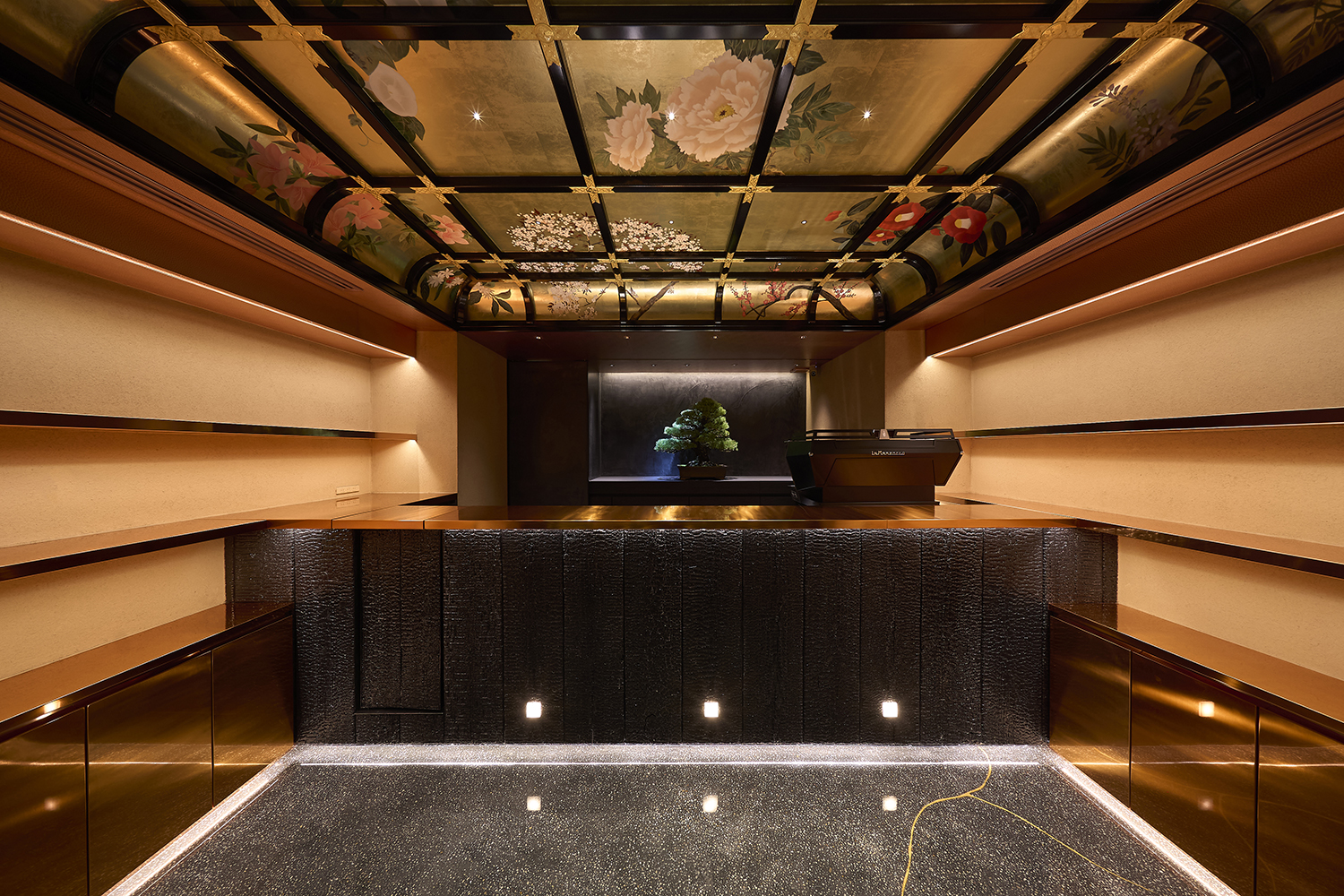
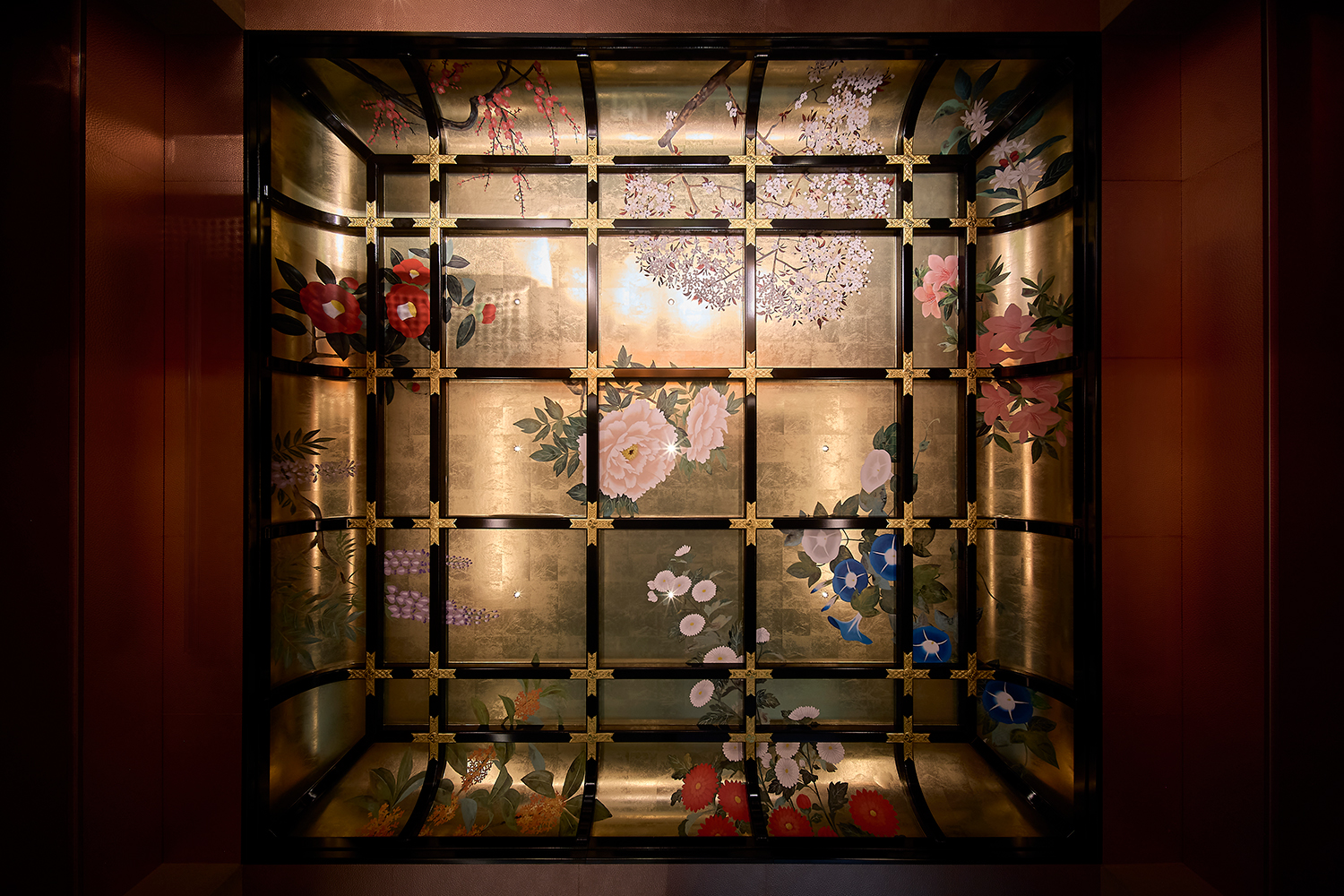
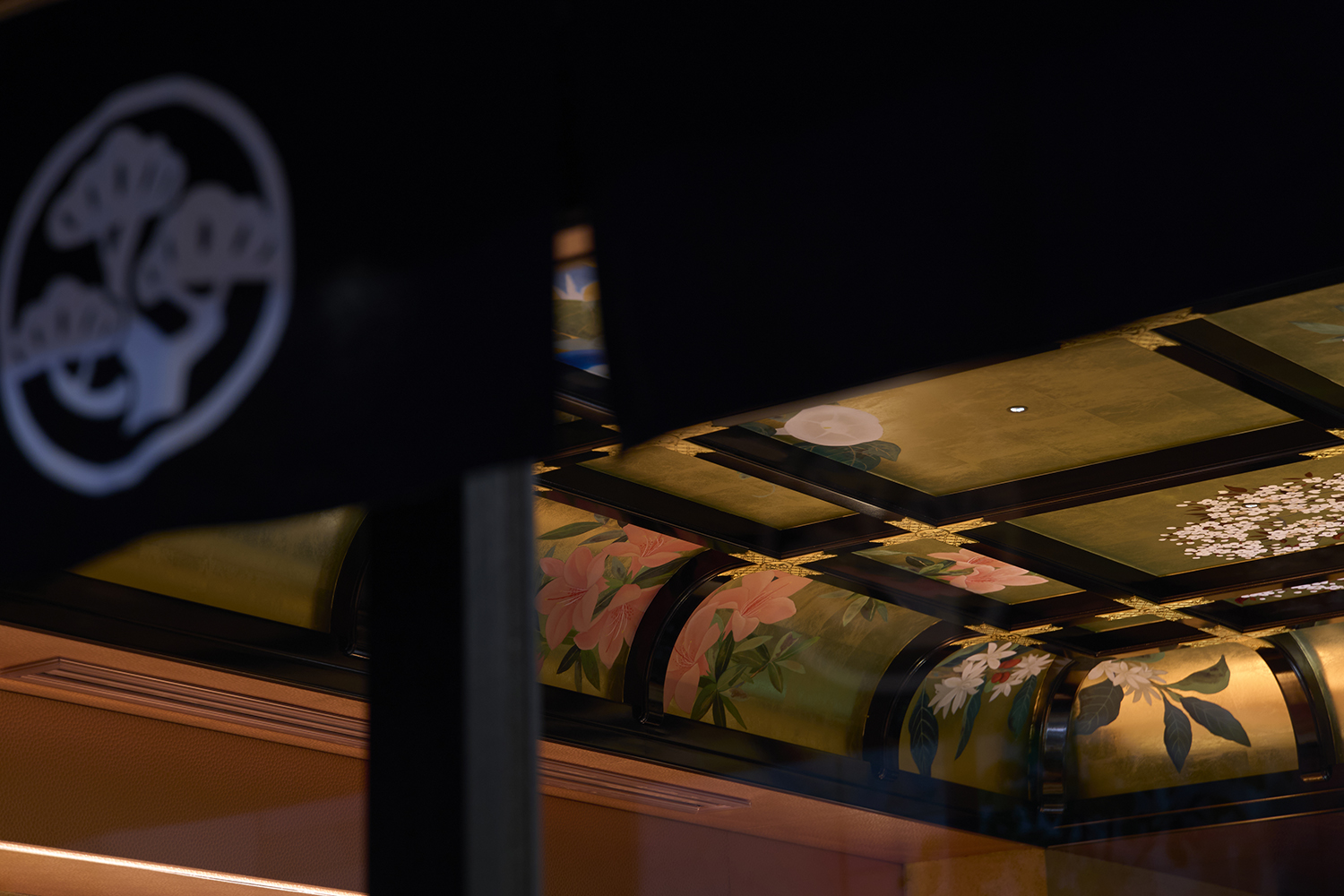
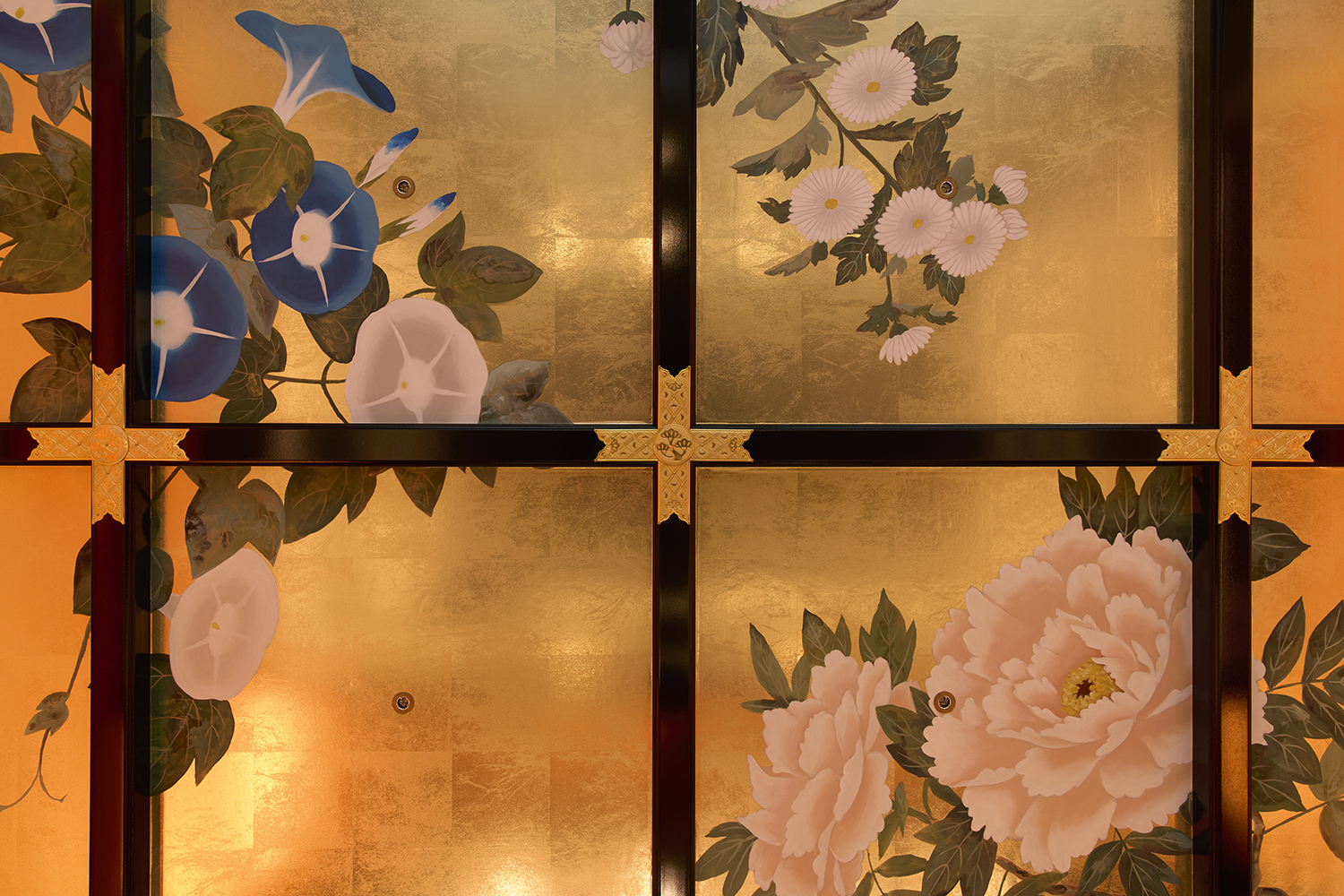
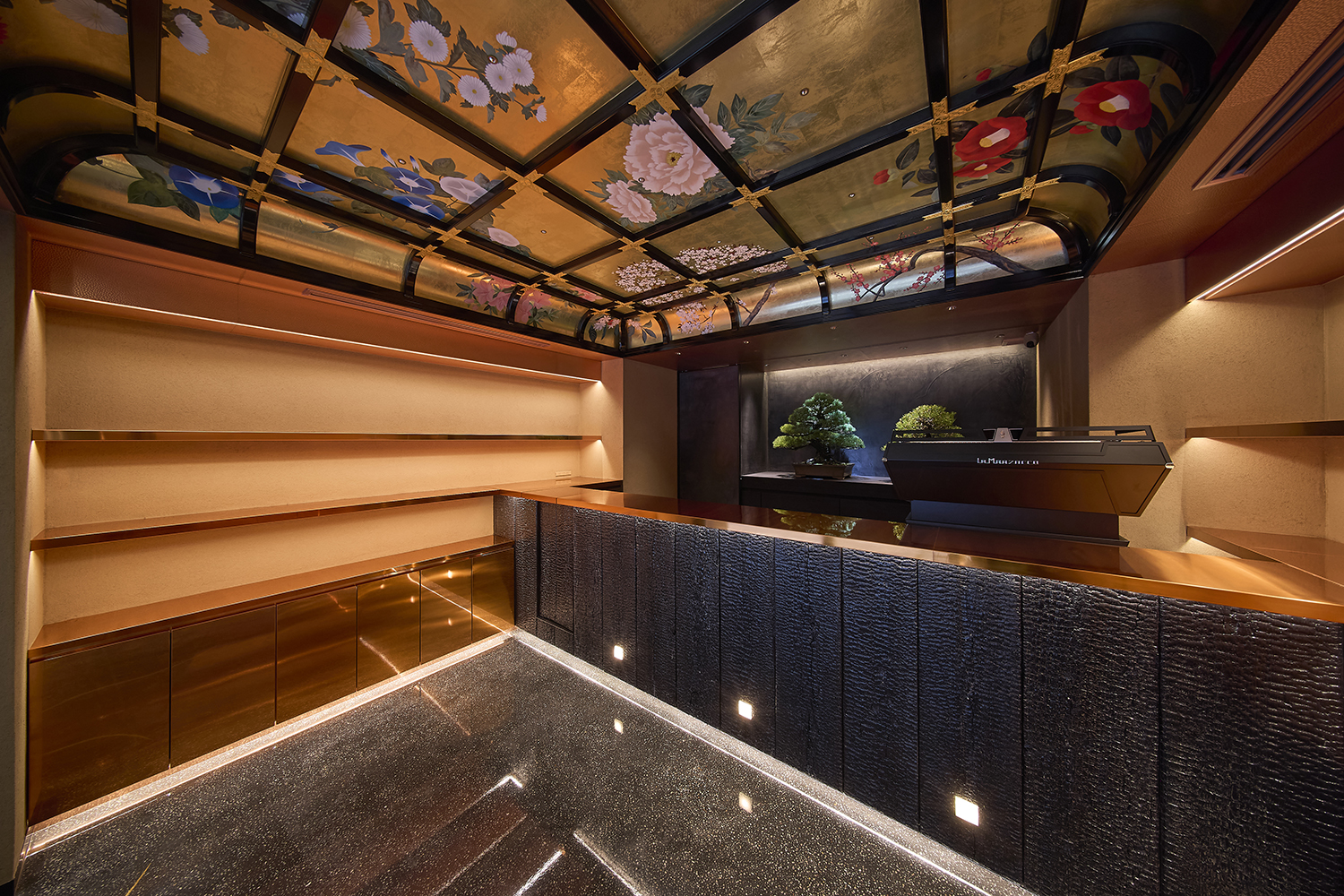
The symbolic centerpiece of the space is the decorated coffered ceiling. Seasonal flowers are expressed across the ceiling panels, with the progression of the seasons arranged clockwise from the seat of honor. From the rear of the shop, flowers representing spring, summer, autumn, and winter unfold throughout the space, while the center is marked by peonies, the king of flowers, emphasizing both splendor and symbolism.
This ceiling is not simply an ornament; it acts as a device that draws the visitor’s gaze upward and transforms the spatial experience itself into a memorable impression. While evoking the uplift of stepping into a chamber within the Honmaru of Edo Castle, its expression remains light and contemporary, allowing visitors of any background to intuitively sense a distinctly Japanese atmosphere.
In its material composition, the project places importance on Japanese tradition and the beauty of aging over time. The walls are finished in traditional Juraku plaster. Its soft earthen texture, deep coloration, and subtle irregularities born of hand craftsmanship bring composure and dignity to the space, creating an environment that turns one’s awareness inward even within the vibrant urban setting of Ginza. Juraku plaster is not merely a material, but a symbolic element that embodies the aesthetic of beauty found within simplicity, as appreciated by Sen no Rikyu.
In contrast, copper is used for the shelves and countertops. Copper is a refined material that softly receives light, while also changing its character over time. This transformation makes visible the passage of time within the store itself as it is used and lived in day by day, giving the space continuity and narrative depth.
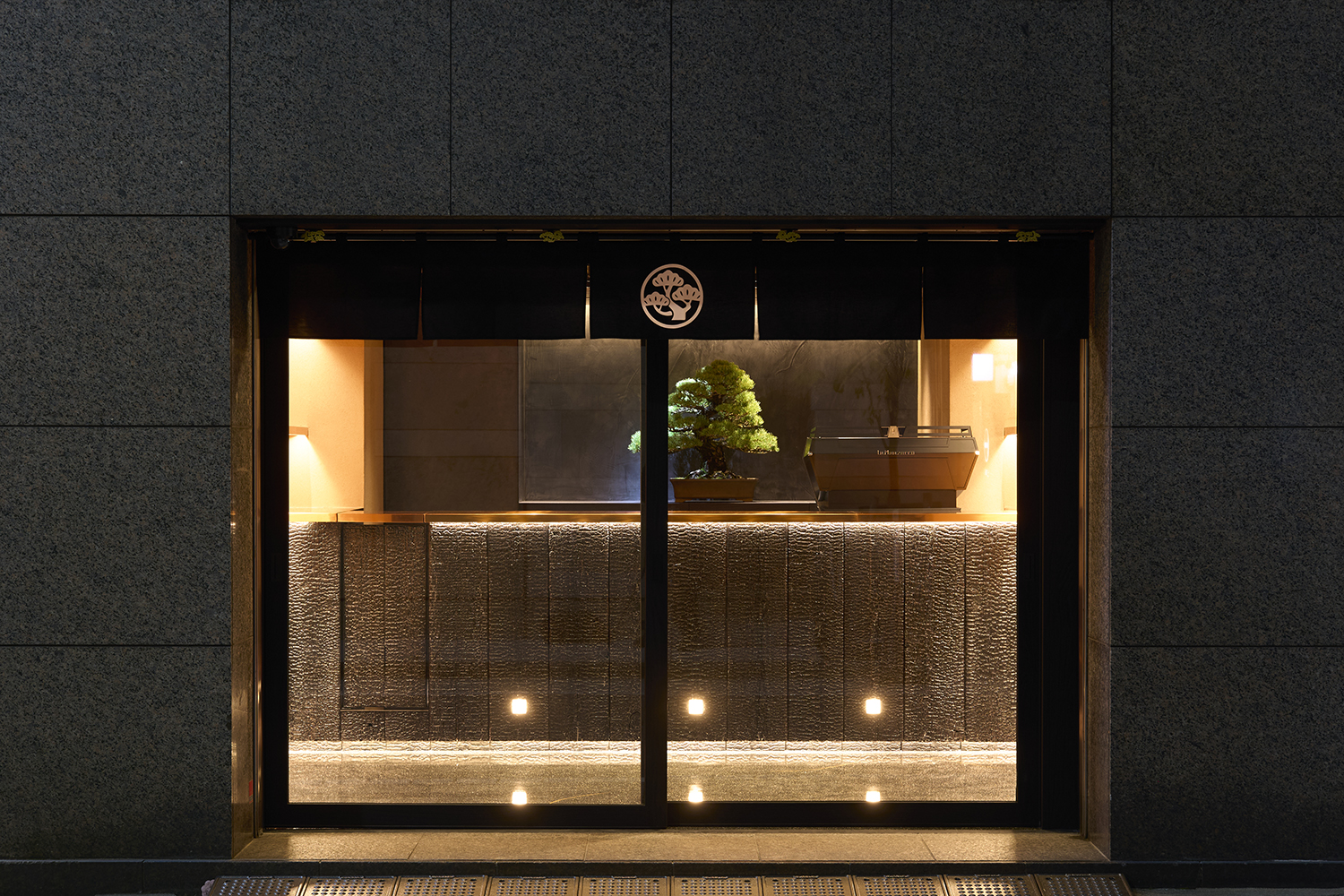
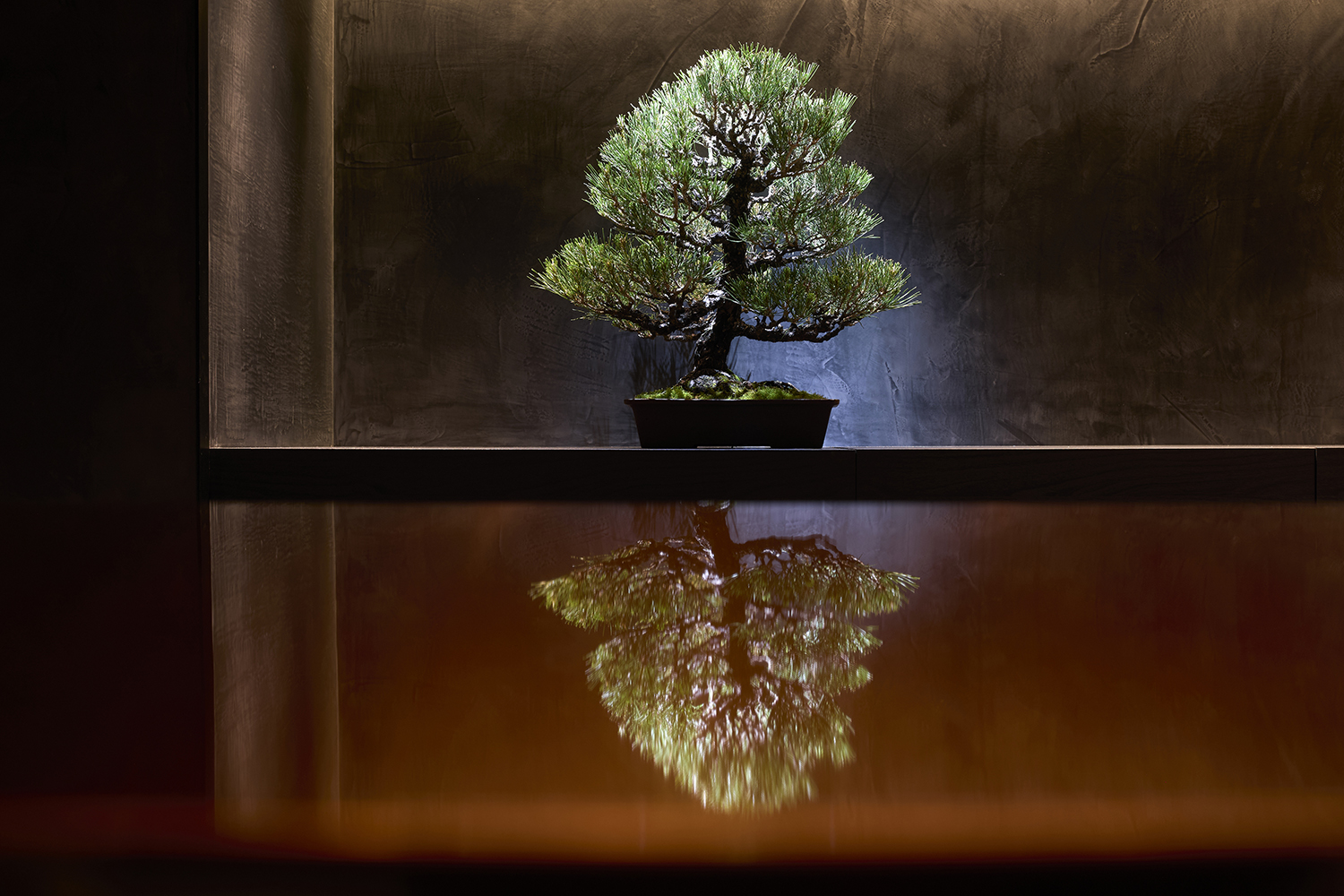
Bonsai is also positioned as an essential element within the space. By condensing the landscape of nature into a limited vessel, bonsai symbolizes a uniquely Japanese sense of beauty, holding within it the accumulation of time and the vitality of life. Its small presence introduces a breathing pause and a sense of depth into the tense and ordered composition that recalls the Honmaru. As visitors notice the bonsai while waiting for their coffee, the space is elevated beyond a mere commercial setting into an experience that touches the deeper layers of Japanese culture.
BONGEN COFFEE GINZA HONMARU is not a space that imitates historical motifs. It is a new kind of Honmaru for the present age: a contemporary reinterpretation of the memory of Edo Castle’s Honmaru, rearticulating the spirit of Japanese culture in the modern city through Juraku plaster, copper, bonsai, and coffee.